G1: User Research Report
G1: User Research Report
Overview
When I was 16, a 20-year-old stranger I met on the internet asked me to be his girlfriend.
I met the stranger on an online game, and he added me on Discord afterwards to private message me. When I told him I was 16, he said he’d wait 2 years for me to turn 18. He asked me multiple times to send him selfies, and when I refused, he tried to gauge my appearance by asking what color my hair was.
At the same time, I’ve made friends through Discord from 5+ years ago who I still talk to. I’ve even met some in real life; I’ve visited an online friend and pet their cat, made hot pot and watched movies with online friends, and gone ice skating with others.
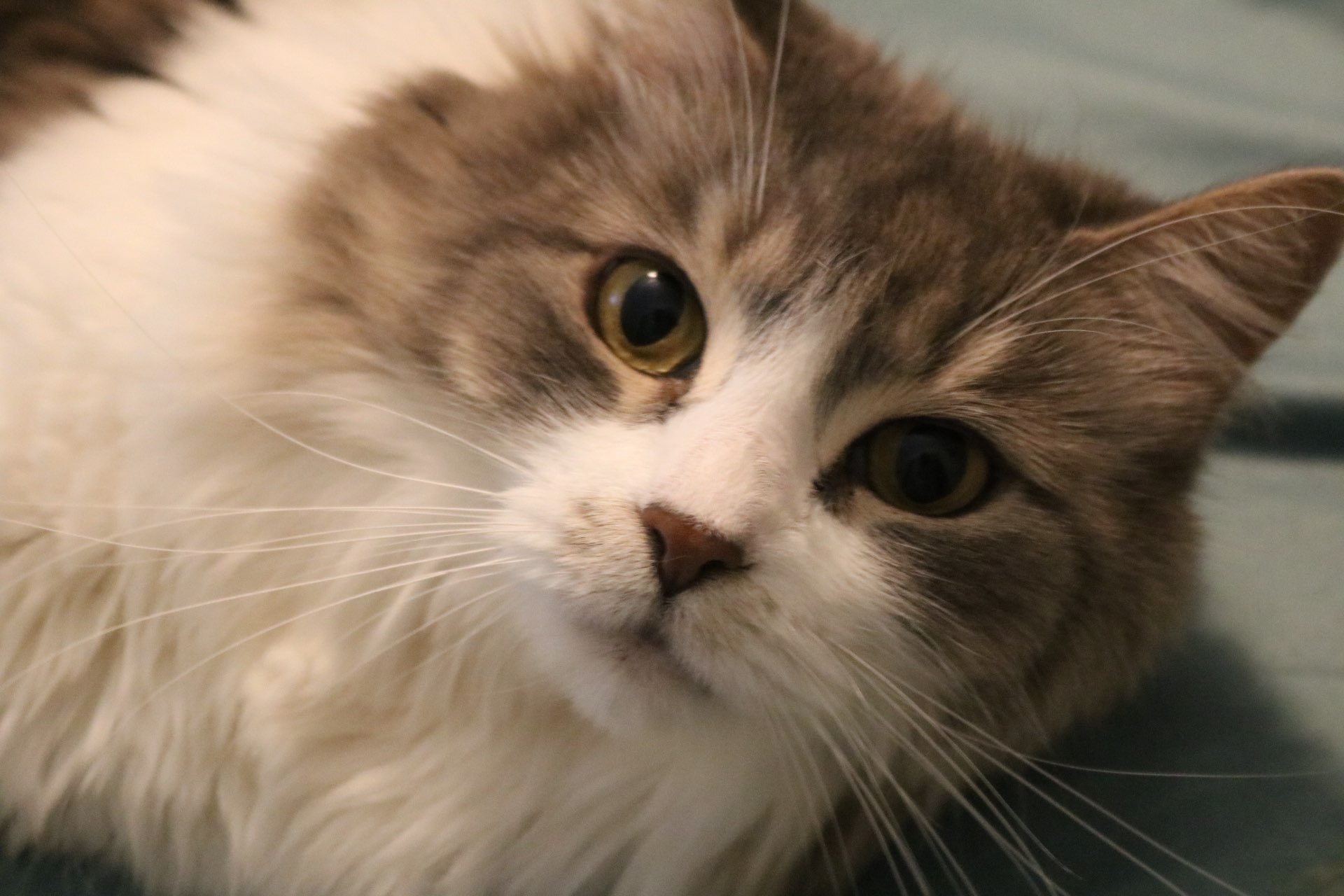 A picture of a cat that my online friend owns!
There are negatives to meeting people online, but at the same time, it can be an avenue to meet lifelong friends. For this project, I decided I want to get a better perspective on how people use social media to meet new people, including reasons why they like or dislike it. By doing so, I wanted to hone in on some specific reasons and purposes for using social media in order to create a better experience around it.
Target Audience
The target audience is young (age ~18-30) people who use social media and are open to meeting new people on it, but dislike doing so because it’s difficult to make meaningful connections compared to in person.
User Research Method
I interviewed 6 total participants who met the eligibility requirements of being age ~18-30 and disliking social media for any reason to meet new people. To find these participants, I started by asking groups of friends in miscellaneous Discord servers if anyone has strong opinions on social media to meet new people. After filtering out the people who didn’t fit the age range or leaned overwhelmingly positively towards using social media to meet new people, I was left with 4 people who met the criteria I was looking for.
In order to find more participants, after the interviews, I used the snowball sampling method and asked the participants if they knew anyone else who harbored strong opinions about the subject matter. Through this method, I found another 2 participants in total who fit the criteria and were willing to participate in the interview.
Participants and Data
After completing the interviews, I summarized each point the participants expressed, and grouped them together. Through this, I noticed 6 main points that were brought up independently in different interviews:
- It’s easier to talk to someone in person than online.
- Pressure to always “be online” and respond exists.
- You can never really be sure that someone is telling the truth about who they are on the internet.
- You have more time to “think before you speak” online.
- Connections online feel shallower when you don’t have to put as much effort into building and maintaining connections.
- Connections online feel shallower when social media often focuses on metrics.
Summary of Reasons
Here are summaries of the main reasons organized by participant.
| Participant #, alias | Basic details | Misc. extra notes | Reason mentioned |
| 1: "C++" | Age 21, undergrad student | 1, 2, 6 | |
| 2: "Astro" | Age 27, lab researcher | Used to use Omegle when it launched. | 1, 2, 3, 4, 5 |
| 3: "Moggle" | Age 27 | 1, 2, 3, 4, 5, 6 | |
| 4: "Link" | Age 23 | Doesn't use "mainstream" social media like Facebook, Instagram, Twitter at all. | 1, 3, 5, 6 |
| 5: "Cookies" | Age 21, software developer | 3, 5, 6 | |
| 6: "Kanon" | Age 21, PhD student | 1, 2, 3, 5, 6 |
Findings (AEIOU)
- Activities: People are open to making new connections and meeting people in person, but are more hesitant to do so in the digital space.
- Environments: For this project, the primary environment is the digital space where people make new connections. However, the physical space is also relevant since there are significant differences between the digital and physical space when making new connections. Most participants found the physical space to be easier for making new connections because it allowed for better understanding of people through mannerisms and facial expressions, and better efficiency in getting messages across.
- Interactions: I focused on (1) the interactions between people meeting for the first time, and (2) the interactions between people and social media. The interactions between people and social media facilitate the ability for people to meet for the first time.
- Objects: Social media can act as a medium for people to interact and meet with each other through the internet. However, connections formed online can feel less genuine compared to connections formed in person. Partially, this is because of the design of social media which facilitates the societal expectation to always “be online,” as well as a perception that social media users are focused on metrics like follower count.
- Users: The interviews focused on young adults aged 18-30 who had a negative impression of social media to meet new people.
Takeaways
Overall, I was able to summarize the reasons why people don’t like using social media to meet new people into 6 main points. I think all of the points can be summarized under the main problem space that social media makes it difficult for people to form meaningful connections online compared to in real life.
Here are a few questions I’m currently exploring:
- Transferring in-person connections online: Can I potentially transfer some of the things that make forming connections in person easier to a digital space?
- Designing for authenticity: How can I design a social media where connections feel more authentic between individuals trying to meet new people? Or, is there a way I can completely go against authenticity and base a platform around anonymity?
- Designing without metrics: How can I design a social media that doesn’t have a large focus on metrics?
- Responsible user engagement: How do I design a social media with a good balance between making the user want to use it, but also not pressuring the user into always being on it?
Appendix: Specific Quotes
Here are specific quotes from each participant inside of the aligned reason mentioned.| Reason mentioned | ||||||
| Participant | It's easier to talk to someone in person than online. (1) | Pressure to always "be online" and respond exists. (2) | You can never really be sure that someone is telling the truth about who they are on the internet. (3) | You can more easily craft up a persona online when you have more time to think about how you want others to perceive you. (4) | Connections online feel shallower when you don't have to put as much effort into building and maintaining connections. (5) | Connections online feel shallower when social media often focuses on metrics. (6) |
| 1: "C++" | "Texting is tiring. It's faster and easier to say things in person." | "When I have dozens of people I need to respond to, it feels bothersome to respond to all of them. Even with 3 people, it feels like a bother. If I had 10+ people to respond to, it might take me a day and I might not even respond to anyone."
"If someone talks to me, I'm not going to ignore them. Texting online is talking to someone, so I need to respond to them. There's an obligation to do so." |
||||
| 2: "Astro" | "I think the quality of the connection would be different. You're also just missing the whole physical aspect. Coming from a biology/ psychological/ sociological standpoint, you're missing a lot of the social cues that you don't get online. You only get those in person." | "There is this immediateness to social media and technology, messaging being so fast and it arriving immediately; sometimes with certain people, there is an expectation of 'you should be responding within this amount of time' as well. Especially if I see that green dot indicating you're online. " | “I think there's a lot of dangers with [social media] with the fact that connections might not be genuine or might not be what they seem to be. There's a lot of people who use social media not as an avenue for meeting people but as an avenue to form pseudo connections that they can use for monetary gain or personal gain.”
"With anonymity, people can say what they want without any repercussion for what they're saying, or without any need to justify or prove what they're saying is true in any sense. And I think that's a big one, where there's always this underlying notion or feeling of, 'Can I 100% believe this?' and no, you can't. Not fully at least and not right away when you first read someone's message. You have to take time to get to know them, etc but even then, nothing is definitive. It's just easier to lie, or be a 'yes man.'" |
"When you meet someone for the first time, there's that awkwardness. There's those 'um's, those 'like's, not knowing what to say, not knowing what they're into, what you're into, etc., maybe worrying about saying a sentence wrong or using some weird grammar incorrectly or saying something funny or worrying about your voice or your appearance. There's all those different things, which online, you do not have to worry about. You have time to type out your message and think about what you want to do. " | "I think with enough time, you can develop pretty strong connections online. I'm not saying you can't, I'm saying it's much harder because both parties need to be putting in effort that doesn't come with the territory. What I mean by that is if you're online, there's a lot of shortcuts. And because of that, it's easier to slack and not put as much effort into it. Technology in general has bridged that gap in a way where less effort is needed. It's much easier for me to go on whatever social media platform, turn on video chat, and have a two hour conversation than me having to drive 20 minutes to their house to meet them so that we can then hang out for 2 hours." | |
| 3: "Moggle" | "It's much easier to have natural flowing conversations over in person than through texts."
"For one, if it's person, if they're a classmate for example, you can see their general attitude towards things, and it's a lot easier to judge a person's character when you can always interact with them and you can pick up these sort of things, right. Versus online, where it's a lot easier to not necessarily lie, but maybe it's harder to see these small nuances in a person." |
"For me personally it doesn't bother me, but I know a lot of other people can definitely be bothered by this. Because if somebody is [shown as online], it gives the assumption that they're free and whether or not they're chatting with another person, they can always spare a few seconds to give a short response to you, and so whether or not in actuality they're busy, in this other person's mind, that's maybe not at the forefront and so they could be bothered by this if they're the type of person that feels the need to always be online and pressured to respond." | "You don't know who you're talking to on the other side of the screen, and it's a lot harder to gauge somebody's character through just text, so if the other person you're talking to is a predator or somebody who's out to harm people, it would be much more difficult to gauge that online than vs. in person because in person, you know you're talking to your peers and you can tell from what other people say about them, like your classmates for example, and it's easier to judge a person's character." | "If someone is confronted with something (it can be both a positive or negative experience for example) people will generally give their first impressions or what comes to the top of their head, but online in like group chats, people have a lot more time to think about a response so they can put a different narrative in how they want to respond to a comment for example, so that can be much more different than an in person face to face conversation." | "For example, with Tinder, you can just Ctrl-C Ctrl-V the same opener to 50 different people, you just swipe on all of them, so there's always this FOMO of 'oh maybe the perfect partner will come along and so I don't know if I really wanna commit too deeply with this one person' online. And you can just talk to so many people simultaneously right, whereas in person, you have to invest a lot more time in a person so you want to focus on really having a genuine connection and you wanna see if this person you're interested in (a potential partner maybe) you want to gauge their character and it's easier to see a person's flaws per se if you're always with them in person vs. if you're online." | "There's a lot of mental stress and other mental-related hardships that certain individuals these days come across because of social media and that might have to do with things like how popular their post is or how popular a person is perceived as, for example instagram you're always chasing more followers. On twitter you're facing more retweets. You're always comparing yourself with somebody. 'Oh I only have 500 likes on this post but this other person is out partying all the time, they're always out eating at these restaurants, they're going to these amazing events, they get 100k likes on a post,' and that definitely has, I feel, some negative impacts towards a person's mental health." |
| 4: "Link" | "There is a lot that I don't know about a person unless I meet them in actuality. So it can be pretty hard if I was trying to talk to someone online and gauge their mannerisms, and that's something I particularly struggle with is until I actually meet the person in real life, I don't really know a lot about their mannerisms or how they would converse normally."
"I guess what I'm trying to get at there is especially in online social groups, it can be kind of hard for me to deduce some people's intentions. I haven't found myself in any weird situations or anything, but just like, I used to be a very serious kind of guy, and I used to struggle a lot with humor and sarcasm. That wasn't something I could always gauge very well. My rule personally is if I don't know you that well and if I don't know your sense of humor, then I'm not sure whether you're joking or not, or whether you're trying to make fun of something." |
"There is also basic concerns like how do you know if a person is actually who they say they are." | "When I was in high school, I was on a forum site for a Minecraft server that I played in. That was probably the most 'social media-esque' type thing that I used. At the end of the day, it felt more burdensome. It was cool to see what people were doing on there, but I just feel like I didn't necessarily need to be on there. I also didn't want to get caught up in unnecessary drama. After a couple of years, I just left it behind and in retrospect, I'm glad I did that. I would say the connections were shallow in the sense that I would talk to them in game, and I would see what they're up to, but outside of that, we never really talked much."
"I think [making new friends through social media] is a lot easier to do if you can build a one-on-one connection. I think with numerous and rare exceptions, I tend to be inactive in large communities. If I tend to make friends online, it would always be through private or direct messages." |
"A lot of social media is about the numbers and algorithms. So I think how many views or or upvotes or whatever that some video or post gets, I feel like that gets a bit more emphasized. Or the number of follows or subscribers that a person or channel has– to me, that feels like more of a quantity over quality thing." | ||
| 5: "Cookies" | "It's hard to filter people on social media who you would want to have that personal connection with."
"On Facebook, my age is 33 or something. I have it as January 1st, 1990. Is that horrible? I don't think so. If you're anonymous the entire time and you make up fake details about yourself, then does it really matter? I don't think it really matters." "If you convinced someone personally that you're someone else, and then you lured them in to exploit them, then that's pretty dangerous." |
"It's about anonymity. Nobody knows who I am on Discord. And the fact that they can't see your face, you don't even have to talk. I add people on Valorant and we just voice chat."
"Reddit is like, you post stuff and everyone sees it on the internet so it feels like there's less connection to people, but Discord's supposed to be a personal social media and it's designed around chatting. Reddit's chat is just an afterthought." "Just in general, people are less willing to share stuff online. It's possible that people will, but it's less likely." |
"Twitter and Instagram are good examples of quantity over quality. I think messaging apps where your follower/following count isn't a publicly displayed stat, then it's quality over quantity."
"It's a big thing where if you have more people following than followers, then you're cringe. If you're following more people than you're following, then it's bad." "If I could see everyone's friend count on their Discord profile, then maybe I'd make decisions based on that. It'd probably be a huge culture shift around that." |
|||
| 6: "Kanon" | "Body language and facial expressions are also why I like talking in person. I can express more in person." | "Let me say, anecdotally with a friend, I send him like 20 messages in a row and I can tell he's not interested in what I'm talking about. Because sometimes he'll respond one to one and send his own stuff, but other times I would send like 20 messages in a row and he wouldn't say anything. That's how our dynamic is, but that's how I know I'm saying something stupid or it's something he's not interested in."
"Personally for me, if someone leaves me on read, I usually feel kinda bad. Sometimes if I need to think of how to respond or it's someone I don't want to talk with, because sometimes if I respond too soon, it feels like you have to have a whole conversation. But if you respond half a day later, you can just send an emoji." "If I read someone's message, I try to respond within a few minutes. Maybe that's coming from my own securities about maybe if people don't respond, maybe they don't find my topic interesting." "Anecdotally, with my ex, I could tell when she's in a bad mood because she'd leave me on read. So maybe that's why I have a negative association." |
"I was messaging my old labmate on January 2nd, and he was like 'oh was it your birthday yesterday? I thought it wasn't right but I didn't know if I should say happy birthday or not because I saw it on Facebook.'"
"I'll pose an ethical question. Is it unethical to pretend to be a girl to get CS:GO skins? In TF2, people would think I was a girl because of my username, and I wouldn't deny it." |
"I only add people I already know on Instagram and I don't think it's constructed to meet new people. The difference between Instagram and Discord is that with Discord, you can interact with [people] so you get to know them better." | "I feel like the culture, at least back in middle school when I was active on Instagram, was add as many people as you can and the person with the highest follower count wins. And you can prove this because there's people who follow you and then unfollow you to get their 'ratio' higher."
"I'm pretty sure my follower to following count was roughly 1:1. So I don't know, a lot of people unfollowed me." |
|